The AI Content Workflow (2026): Automate Research, Outlines, and On-Page Optimization
Posted on
February 5, 2026

.svg)

An AI content workflow is redefining how teams research, plan, and optimize content, accelerating output while tying every asset to measurable ROI. It’s a structured, AI-driven process that streamlines each stage of content development, from research to optimization.
Many marketers still face challenges like lengthy research, inconsistent content quality, and underperforming SEO results. AI enables content to align more precisely with user intent and business goals.
By automating research and on-page SEO, teams can focus on strategy, storytelling, and strengthening E-E-A-T signals that build trust and visibility. Let’s learn how to implement a comprehensive AI content workflow that helps brands stand out.

A high-performing AI content workflow is built on structured stages, each designed specifically to address common challenges like slow production cycles, missed SEO opportunities, and inconsistent content quality.
We are breaking down the workflow into actionable steps that will help you scale your content efficiently while maintaining engagement and accuracy. The leading AI content marketing agency follows these stages to stay ahead of the curve.
Here are the 5 key stages of an AI content workflow:
One of the most time-consuming tasks for content teams is searching for relevant topics and understanding audience intent. AI tools use NLP and SERP data to analyze search trends, competitor coverage, and social insights.
For instance, educational platforms can discover trending learning topics, while travel brands can identify popular destinations during peak seasons. This not only saves time but also ensures content relevance.
Creating structured outlines is vital for SEO-friendly content. AI can generate content outline workflows that include target keywords, subheadings, recommended word counts, and internal linking suggestions.
AI outline generators use semantic clustering to build keyword-rich subheads, target entities, and internal-link suggestions. This allows marketers to focus on narrative quality instead of structural planning, bridging the gap between speed and precision.
AI-generated drafts can accelerate production, but human oversight remains vital. Human-in-the-loop editing ensures the content aligns with brand voice, maintains accuracy, and addresses complex topics.
For healthcare or legal content, this step prevents factual errors while still leveraging AI efficiency. HITL editing validates brand tone and factual accuracy before publishing.

A high-quality photo-realistic image of a professional editor working on a sleek laptop. On the screen, a digital AI assistant is highlighting text and suggesting "E-E-A-T improvements." A transparent holographic interface floats slightly above the keyboard showing data clusters. The atmosphere is collaborative and high-end. Soft studio lighting, shallow depth of field.
After drafting, the content needs to be refined for search engines and user experience. AI tools recommend on-page SEO improvements, like schema, metadata, and readability tweaks.
Travel websites can optimize itineraries, while e-commerce blogs can highlight product benefits more effectively.
Monitoring content performance and iterating ensures compliance with brand and SEO standards.
Additionally, AI enables teams to monitor engagement, keyword performance, and how content surfaces within AI-powered search features. This stage turns content into a measurable asset.
The top-tier AI content marketing agency is already using advanced AI tools to simplify and enhance its content workflow. But selecting the most suitable tools is time-consuming and stressful work.
The right tools not only automate content research and simplify outlines but also enhance optimization, internal linking, schema creation, and overall governance.
The most effective categories and examples for 2025 are:
Enforcing an AI content workflow is only effective if content maintains authority, consistency, credibility, and trustworthiness. By following E-E-A-T signals for AI search and strong governance, ensure your AI-generated content drives reliability and long-term SEO impact.
Set clear guidelines for tone, style, E-E-A-T signals, and factual accuracy to maintain brand consistency. This ensures AI outputs align with your editorial standards while preventing errors or misrepresentation.
Embed E-E-A-T principles throughout the workflow:
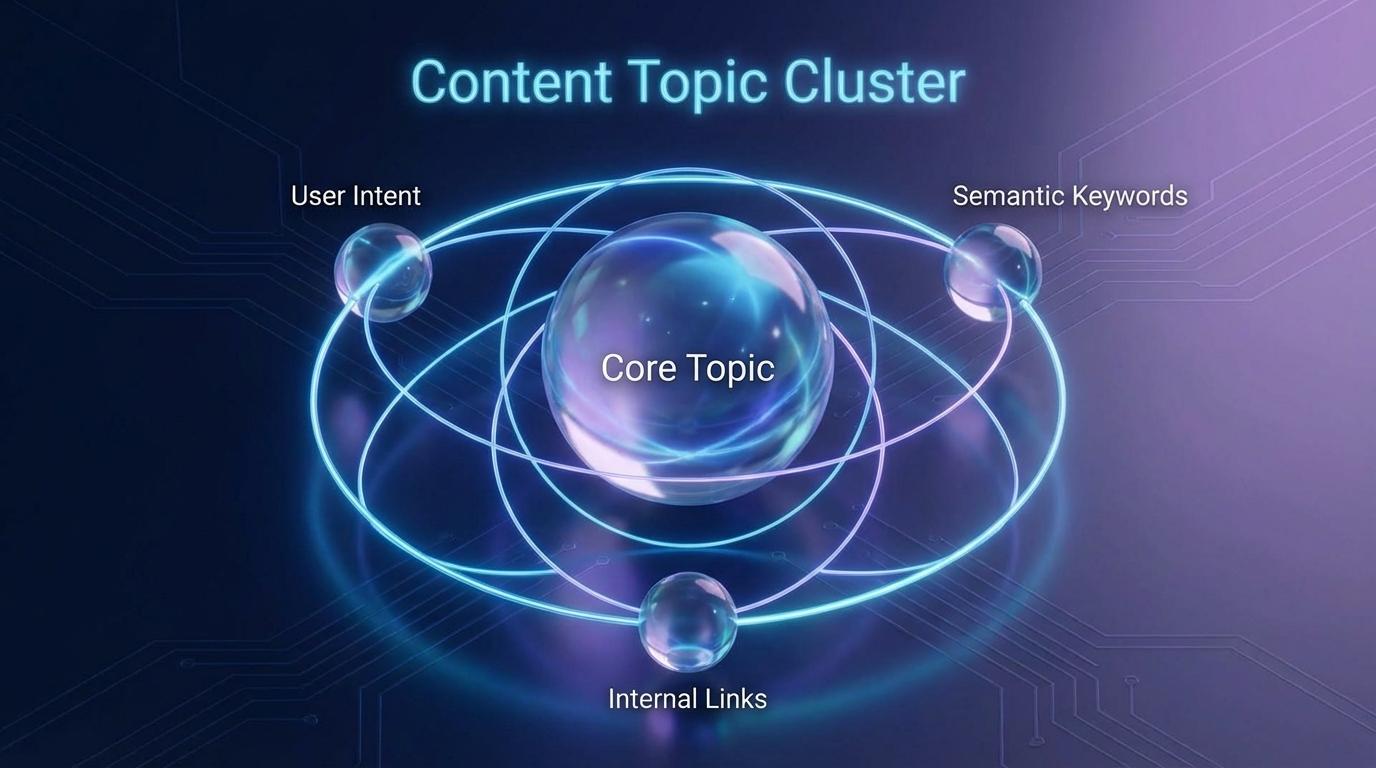
Organize AI-generated content into clusters around primary topics, ensuring depth and relevance. This approach improves topical authority, enhances AI content optimization, and boosts organic visibility.
Even with advanced AI, human editors are critical for reviewing factual accuracy, tone, and adherence to guidelines. This step ensures high-quality output, minimizes errors, and strengthens trustworthiness.
Involve all brand layers, i.e., SEO, subject-matter experts, editors, and PR to verify accuracy before publication.
For this, you can use certain AI-powered content governance tools to automatically scan content for brand voice alignment, grammar, compliance flags, and other quality standards that enable human reviewers to focus on other important tasks.
To make your AI content workflow truly effective, choosing the right tools is essential. The right AI stack can automate repetitive tasks, enhance content optimization, and free up your team to focus on creativity, storytelling, and strategy.
Here are the robust AI tools to streamline your content workflow seamlessly:
Platforms like MarketMuse, BuzzSumo, and Semrush AI help automate content research by analyzing search trends, competitor content, and audience intent.
For example, a travel blog can use these tools to identify trending topics such as “Eco-Friendly Resorts” or “Hidden Gems in Southeast Asia.”
Tools like Frase, Content Harmony, and Surfer SEO assist in generating AI content outline workflows and briefs, which ensure every article is structured for on-page SEO with AI and readability.
Platforms like Clearscope and Rytr help optimize content for keywords, AI Overviews optimization, and semantic relevance. These tools ensure your content is aligned with search algorithms and an entity-first content strategy.
Automation tools like Zapier, Airtable AI, and ContentStudio streamline editorial workflows, manage deadlines, and coordinate approvals. This supports **content governance and guardrails while saving significant manual effort.
Tools such as Grammarly, Writer.com, and ProWritingAid combine AI efficiency with human oversight, enabling human-in-the-loop content creation for accuracy, tone, and brand alignment.
A well-structured AI content workflow ensures that your content consistently drives engagement and SEO results. Here’s a step-by-step approach to automate content research, outlines, and on-page optimization effectively.
Start with AI-powered tools to gather insights on trending topics, keywords, and audience intent:
Create structured AI content outline workflows for clarity and efficiency:
Optimize content for search engines and readers using AI tools:
Even the best AI workflows require human oversight:
After publishing, use AI to track performance:
By following this structured process, marketers can scale content efficiently, maintain quality, and achieve measurable results across industries like travel, healthcare, education, and SaaS.
AI can generate drafts, outlines, and data-backed recommendations, but it’s humans who ensure the content reflects the brand’s voice, stays factually accurate, and truly connects with readers.
By adopting a human-in-the-loop editing approach, brands can bridge the gap between authenticity and automation, creating content that’s both efficient and genuinely engaging.
AI tools, while powerful, can sometimes miss the nuances of complex topics or generate overly generic content. That’s why human editors play a crucial role by verifying facts and refining context, especially in sensitive industries like healthcare, finance, or legal services.
This human oversight not only strengthens credibility but also reinforces E-E-A-T signals, helping brands build trust with both users and search engines.
AI is great at producing well-structured content quickly, but humans bring it to life through storytelling, personal insights, and relatable examples.
For example:
Together, AI and human creativity create content that’s both efficient and emotionally engaging.
Consistency is critical, and editors must ensure all AI-generated content pieces align perfectly with the brand’s personality, style, and messaging guidelines across all platforms. It builds credibility, strengthens brand identity, and nurtures lasting user loyalty.
Even with AI suggestions for on-page SEO, writers/editors should refine headings, meta descriptions, and internal links. Implement internal linking and schema recommendations strategically to improve crawlability and UX.
Feed performance data back into the prompt and model tuning. Monitor key performance metrics, assess user engagement, and fine-tune the AI workflow based on real insights.
This ongoing and iterative process helps enhance content quality, boost performance, and maximize ROI over time.
With an AI content workflow, teams can scale content efficiently, enhance AI-driven content ROI, strengthen authority, and maintain relevance across industries like travel, healthcare, education, e-commerce, etc.
Businesses embracing AI content optimization today can gain a competitive advantage in search visibility and audience engagement.
Are you ready to transform your content strategy with AI? See how ViralGraphs helps teams automate, optimize, and scale content using AI-powered workflows built for measurable growth.

Ans. An AI content workflow reduces the time spent on research, outlining, and on-page optimization, allowing teams to scale content without losing quality. By aligning every asset with E-E-A-T signals and topic clusters, businesses see measurable ROI through enhanced search rankings, faster campaign execution, and higher content engagement.
Ans. AI tools automate metadata, schema, and internal linking and schema with AI, improving on-page SEO with AI, enhancing search visibility, and supporting AI Overviews optimization for better user engagement.
Ans. Yes, AI streamlines AI briefs and content planning, facilitates AI content outline workflow, and identifies opportunities for topic clustering with AI, ensuring an organized, entity-first content strategy that boosts search relevance.
.jpg)

%202.png)
We offers a comprehensive suite of digital marketing services that cover all aspects of our online presence. From SEO and social media marketing to content creation and PPC advertising, they have the expertise and resources to handle our diverse marketing needs.


%202.svg)


.webp)


